

Welcome to Making Time. What makes a life feel vivid rather than rushed? These are my reflections from rural Oregon on attention, ritual, and making things by hand. If you’d like to follow along, you can subscribe for free.
“Live the questions now. Perhaps then, someday far in the future, you will gradually, without even noticing it, live your way into the answer.”
-Rainer Maria Rilke, from “Letters to a Young Poet”
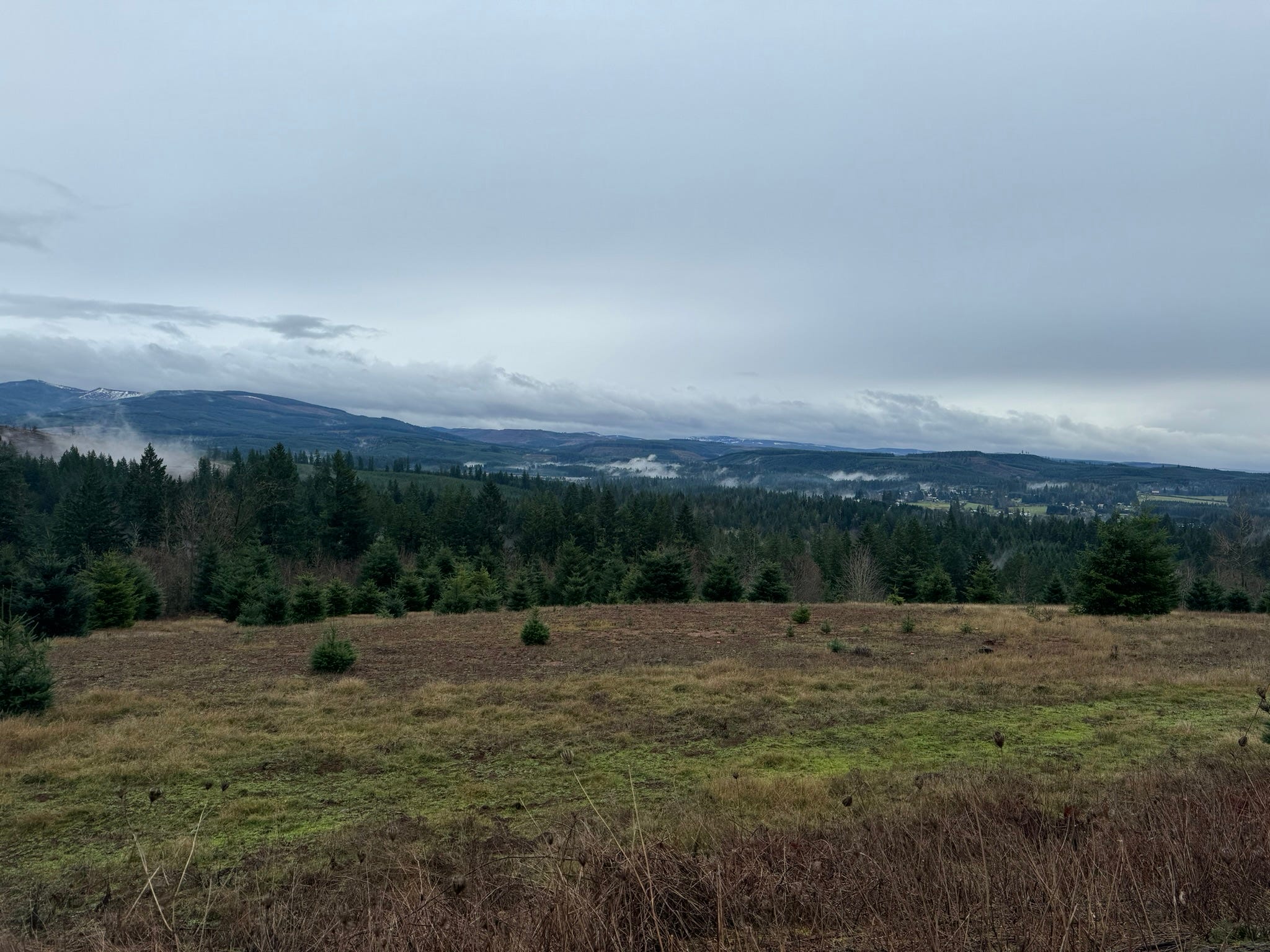
Outside my car windows, the world looks serene.
I leave the house early to make the hour-long weekly drive into the city for work. The roads are framed with pastures and woods, and at this time of year the grass often sparkles with frost. Horses stand around with blankets on their backs, steam rising from their noses, and goats and sheep wander slowly as I speed past. There’s even a mini donkey.
Inside the car, things are not always so peaceful. With such a long commute, there are nearly always unexpected inconveniences, and I never seem to learn to start expecting them. I’m usually running a few minutes behind.
My mind speeds up, as if to make up for the lost time. Will I hit more traffic? Why did this tractor have to pull in front of me? When will it turn? Will I be able to find parking?
Then, a new thought: “What if this were easy?”
My mind relaxes at once. Oh, that’s right: ease.
I can’t control the circumstances of this commute, so why not enjoy it? I start to pay attention again. Once again, I can see the towering fir trees wrapped in mist, the animals starting their day with me, the frozen apples on the ground at the side of the road.
Everything is quiet again.

Is there an easy way?
But this didn’t come naturally. A year ago, I wouldn’t have thought to ask that question at all.
At the beginning of 2025, I decided to approach the new year a little differently.
Instead of my usual Type A process of taking stock with an annual review, figuring out some concrete improvements I could make, and breaking these down into goals, I realized that all I really wanted was a bit more ease in my life.
How do you set a goal to make things easier for yourself?
Building objectives, measuring them, and holding myself accountable seemed totally counter to the very idea of ease. Perhaps I needed a simple intention, a theme or watchword for the year.
I’d tried this once before – and failed.
Many years ago, exhausted by my own tendency to try to do everything all at once, I chose the word “focus” for the year. By the end of January, I’d completely forgotten about this theme as I resumed my long-ingrained scattered and harried behavior. A single word is just no match for a lifetime of habit.
Not only that, but most evidence pointed in the opposite direction. Everyone tells you that you need to have concrete goals, measures, and milestones to really get anything done. And that’s always been my way. For the most part, it works. I do get things done.
But sometimes, even though your way of doing things works, it can only take you so far. I had hit upon a limitation to my usual way of doing things.
When goal planning isn’t enough
I was overwhelmed. Each day felt like a rush to the finish line, and the finish line seemed to recede further and further away.
I would create a list of everything I needed to accomplish in the morning, adding to it throughout the day. By evening, all I felt was discouraged when I saw how much was left, the checkboxes empty.
Even the things I enjoy became a part of this sense of burden. There was never enough time for everything I was committed to, so everything had to be done as quickly and efficiently as possible. It left me feeling numb, unable to enjoy or even fully experience any of it.
I’d tried creating better systems, carving out time for things I enjoyed, giving myself more compassion. All of these helped, but I kept returning to the same anxious thought over and over: I am not doing enough.
One evening at my desk, after another deflating review of my daily checklist, that thought bubbled up again. I am not doing enough. And then, surprisingly, another thought: So what?
What if that’s not a problem?
Asking the right questions
It wasn’t a realization, just a question. I sat with it for a minute, staring into the dark trees out my office window. Perhaps I didn’t need systems and answers, but just more questions like this.
I was facing something that went beyond obvious solutions. It was not a practical question, but a spiritual one: How do I let go of unnecessary struggle and find more ease?
In the morning, I’d take a minute to write a couple thoughts. What if today were easy? Just writing a few bullet points helped keep the questions alive throughout the day, so I wouldn’t forget it (as I’d forgotten intentions in the past).
During the day, when I’d find myself struggling, not feeling productive enough, I’d turn it into a question: What if this were easy? What would that look like?
Slowly, I began to play with the idea in my life.
For example, it took me a while to realize this, but weekends actually give me the most anxiety. I wake up Saturday morning keenly aware that I have only two days to cram in all the household chores, the meal prep, the gardening, and all the other fun stuff I want to get done before Monday rolls around. Soon, I’d have a ridiculously long to-do list sitting on the kitchen table, watching me as I moved quickly around the house, a countdown timer running through my mind.
But over the course of the year, as I thought about the question of ease, I slowly loosened my grip. I started to take a more intuitive approach to free time. I let go of doing everything, even things I wanted.
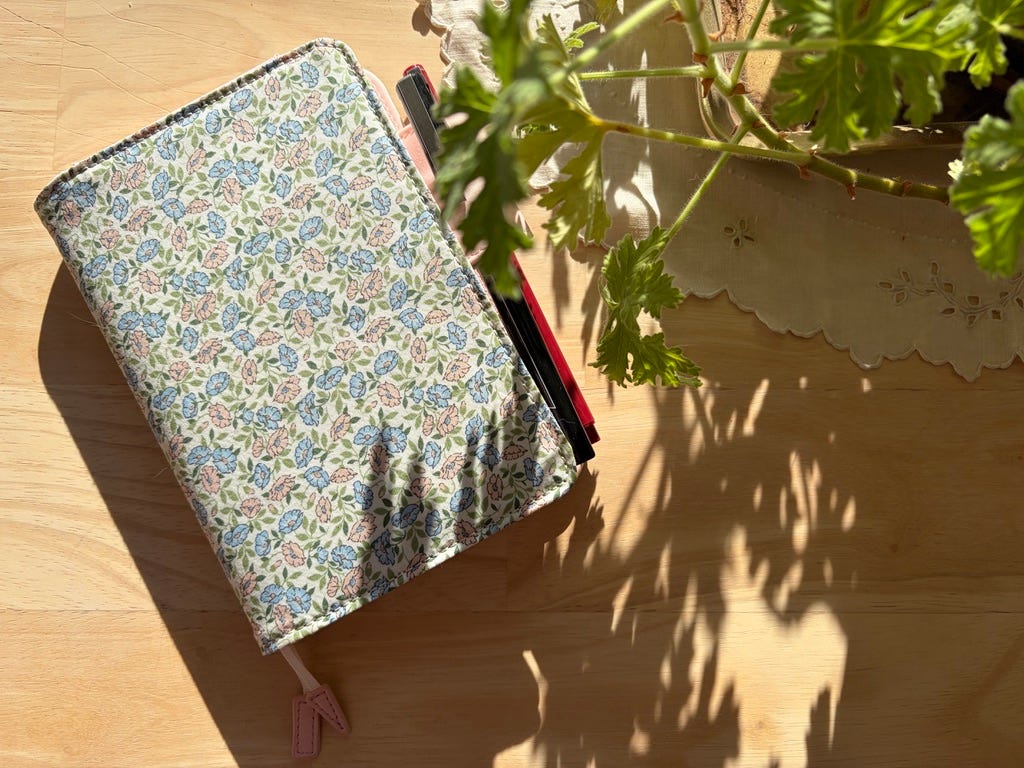
Even my body started to move more slowly as I focused on just enjoying a simple task, like watering the houseplants, without thinking about what was next. Watering the houseplants was just watering the houseplants, a chance to care for something, to watch the water fill the soil, to smell the geranium leaves as I picked off the yellow ones. It was not an abstract “task”.
Sometimes, systems and objectives are the way to go. There’s no doubt that they work. If you want to get things done, it helps to have a plan.
But other times, it isn’t an accomplishment you’re pursuing, but a question about how to live.

Thanks for reading Making Time. If you’re new here, you can subscribe for free to receive new posts a few times a month.
I use a single word as guidance for the year - it's a practice that has shaped my life in interesting ways over the last decade or so I've been doing it. My word for this year is lucipetal - turning towards the light.
When I’m faced with a long to-do list (especially on a weekend, when my time isn’t structured the way it is during the workweek) I try, as often as I can, to simply take the day as it comes. I set the list aside, begin with one small task, and let that carry me toward whatever feels right next. I usually get just as much done as I would with a list-based approach, but the non-essential, self-imposed pressures tend to fall away. What remains is a way of moving through the day that’s far more relaxed than being a slave to a must-do list.
You are a great writer and photographer!