

Welcome to Making Time. What makes a life feel vivid rather than rushed? These are my reflections from rural Oregon on attention, ritual, and making things by hand. If you’d like to follow along, you can subscribe for free.
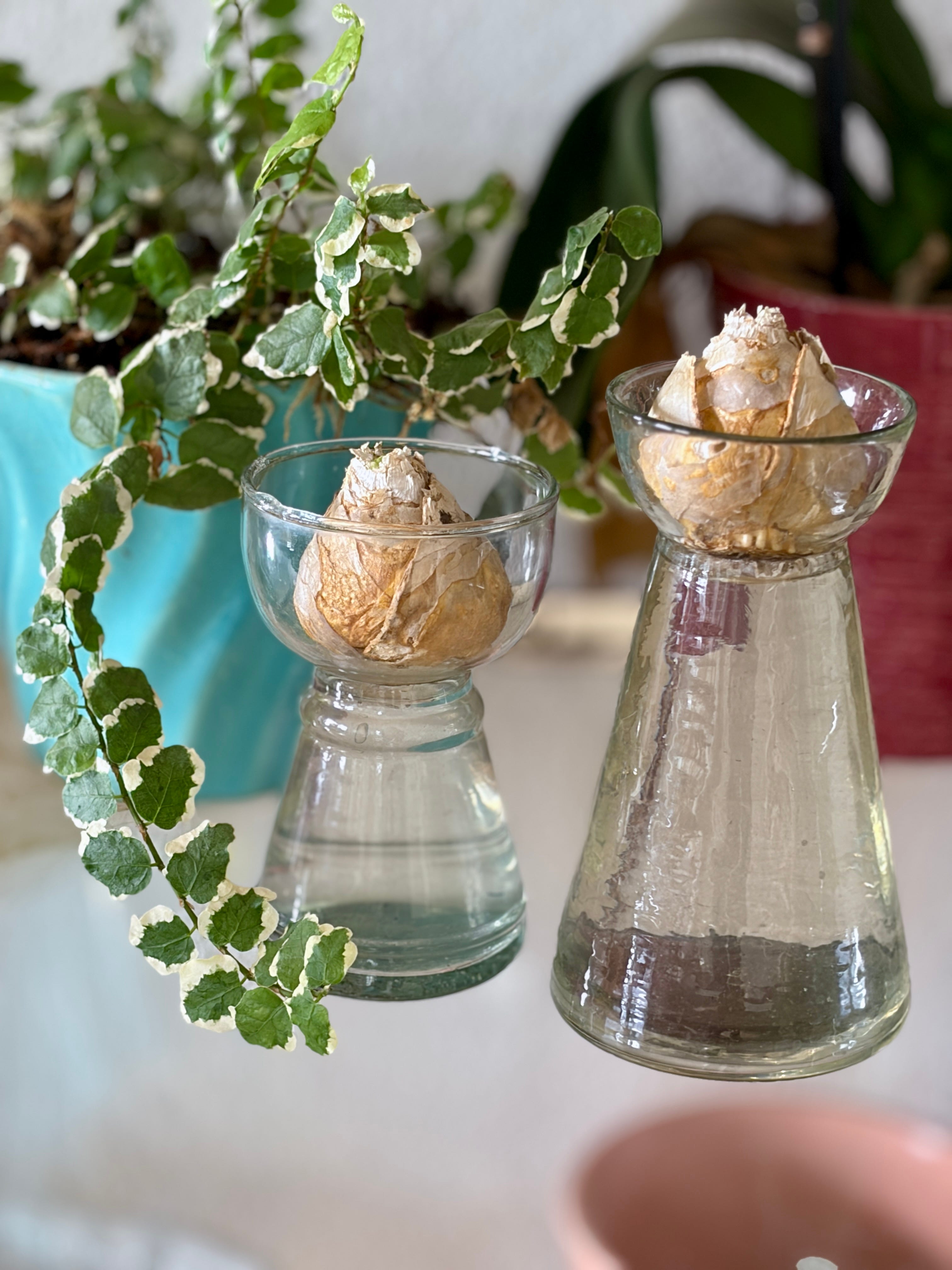
There’s a mesh bag full of bulbs on the kitchen counter, the papery skin flaking off as I unwrap them. I’d found them in the back of our garage fridge, where I’d put them to cool in the fall. I’d nearly forgotten they were there.
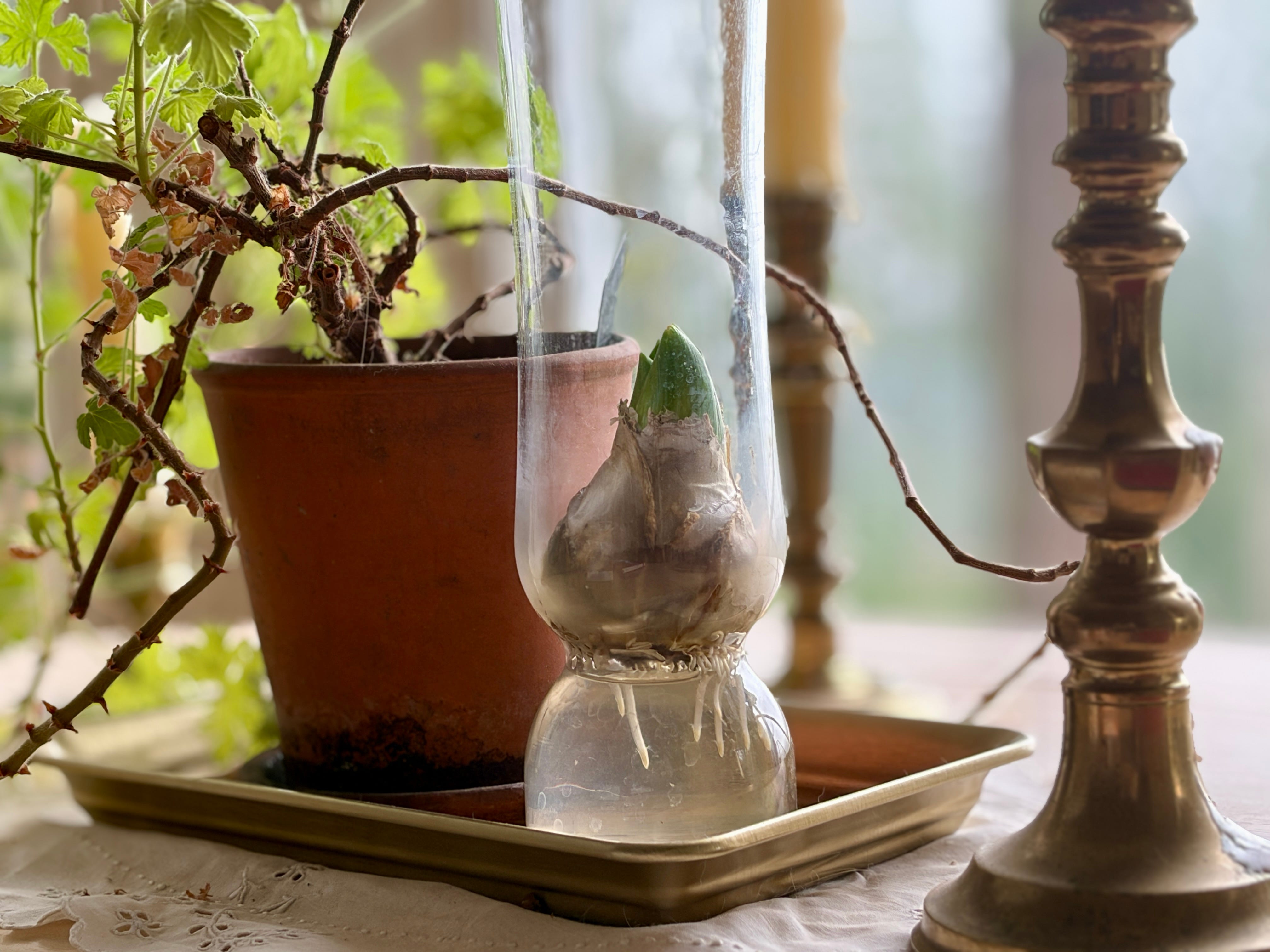
Hyacinths need a period of chill in order to bloom indoors. Now, after a few months of cold, I take them out and set each one in its own glass vase. I fill them with water, so it just kisses the bottom. Too much water and the bulb will rot, too little and the roots won’t grow.
I set each near a window. The water and sunlight will wake them from their dormancy. A thick green stem will shoot up, tendrils of roots will float down, and a fragrant bloom of pale spring yellow will open. Hyacinth Orientalis, “City of Haarlem,” the color and scent of spring.
Forcing bulbs is easy, but it takes time and I’ve never considered myself a patient person. I had trouble even getting these started. I’d see them in the refrigerator each time I ran out to grab something, thinking, “I’ll have to do something with those soon..” or “I wish I had time for that right now” before slamming the door closed and moving on with my day. After a while, I barely noticed them.
There’s so much I must do, I think to myself. It’s a constant refrain, whether I’m tidying the kitchen, at my desk working, or sewing a dress. I think of everything else, my body in one place and my mind skipping ahead. This has come to feel normal.
But that greedy, impatient voice is not the only one I have. I’ve found that there is another, much more quiet voice. It speaks in feelings and sensations, in a sense of being fully alive. It is wordless, but always speaking.
Back in the 70s, May Sarton wrote, “Machines do things very quickly and outside the natural rhythm of life, and we are indignant if a car doesn’t start at the first try. So the few things that we still do, such as cooking (though there are TV dinners!), knitting, gardening, anything at all that cannot be hurried have a very particular value.”
When I am in the middle of these humble and ordinary acts, I have a choice. I can do them as a machine would, attempting to control and speed things up. I can skip over the seemingly inconsequential details and move on to the next task. This is a default mode.
Or, I can practice being human. In the coming weeks, I’ll watch the bulbs carefully. I’ll hold the vase close to my eyes to make sure the water line is just right. I’ll notice the first white roots start to grow, give them sunshine, and then wait.
In time, I may be rewarded when those star-shaped blossoms burst out from the stem. Or perhaps the bulbs will rot after all that attention. In either case, I’ve practiced. I’ve noticed the slow, steady pulse of life.

Thanks for reading Making Time. If you’re new here, you can subscribe for free to receive new posts a few times a month.
Those little glass jars you have your bulbs in are very cool 💜. I hope your bulbs grow!
The refrigerator door got me. I know that door well, the thing waiting, the quick glance, the "soon," the closing.
What I love about this is the honesty that the loud, impatient voice isn't the enemy. It's just not the only one. And that quieter voice, the one that speaks in sensations, in aliveness, doesn't fight for airtime. It just waits.
May Sarton knew something the productivity world never will: some things cannot be hurried without losing the very thing you were after.
I want to mull over, "I can practice being human" for a good while. As I am "mulling" I need to pull the five gallon bucket of begonias from the cool space by the root cellar. Thank you for this.